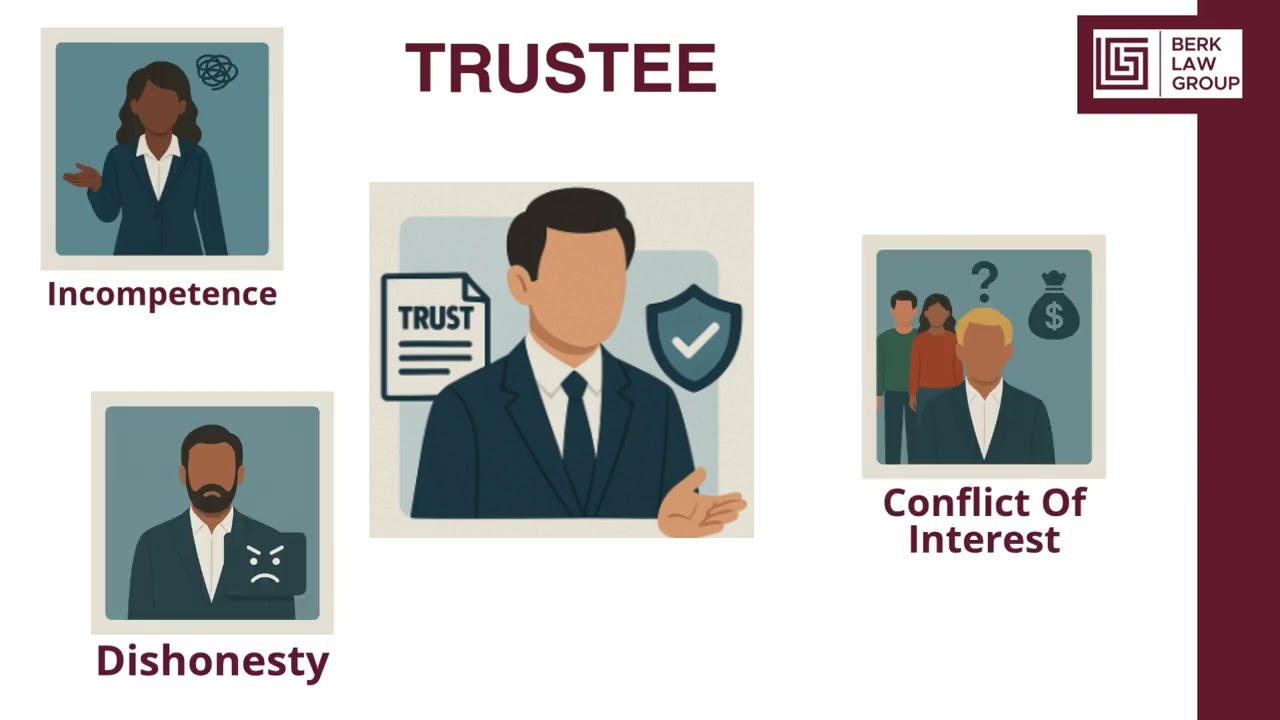
Trustees Have Serious Legal Responsibilities
Under Arizona law, a trustee is legally required to manage the trust prudently, honestly, and solely in the best interests of the beneficiaries. When they fail to meet those duties, it’s called breach of trust or trust mismanagement. A trustee’s role carries fiduciary obligations, meaning they must follow the trust’s terms and act with care, skill, and loyalty.
Examples of Trust Mismanagement
Trust mismanagement can range from careless handling of assets to outright fraud. Common examples include:
-
Failing to keep accurate records or provide timely accountings
-
Misusing trust funds for personal benefit
-
Making risky or unauthorized investments
-
Ignoring beneficiary requests for information
-
Unequal or improper distributions
-
Failing to preserve or insure trust property
Even unintentional mistakes can expose a trustee to liability.
Beneficiaries’ Rights Under Arizona Law
Beneficiaries have the right to:
-
Request accountings and financial statements
-
Compel the trustee to follow the trust’s terms
-
File a petition to remove or suspend the trustee
-
Seek damages (called a surcharge) for losses caused by mismanagement
The court may also order the trustee to restore lost value, return misused assets, or pay beneficiaries’ attorney’s fees if misconduct is proven.
How the Court Determines Trustee Liability
To hold a trustee accountable, the court examines whether they:
-
Violated a duty (e.g., loyalty, prudence, impartiality);
-
Acted in bad faith or with gross negligence; and
-
Caused financial harm to the trust or beneficiaries.
Arizona’s Uniform Trust Code gives courts broad power to remedy breaches — from removal to restitution.
Time Limits to Bring a Claim
Under A.R.S. § 14-11005,
A. A beneficiary may not commence a proceeding against a trustee for breach of trust more than one year after the date the beneficiary or a representative of the beneficiary was sent a report that adequately disclosed the existence of a potential claim for breach of trust and informed the beneficiary of the time allowed for commencing a proceeding.
B. A report adequately discloses the existence of a potential claim for breach of trust if it provides sufficient information so that the beneficiary or representative knows of the potential claim or should have inquired into its existence.
C. If subsection A does not apply, a judicial proceeding by a beneficiary against a trustee for breach of trust must be commenced within two years after the first to occur of:
1. The removal, resignation or death of the trustee.
2. The termination of the beneficiary’s interest in the trust.
3. The termination of the trust.
Failing to act promptly can permanently bar your claim.
At Berk Law Group, We Hold Trustees Accountable
Our Scottsdale trust and estate litigation attorneys handle complex trust mismanagement cases across Arizona. Whether you’re a beneficiary seeking answers or a trustee accused of misconduct, we provide clear guidance and strong advocacy to protect your interests. Contact us today for a confidential consultation to discuss your options. Watch this video to learn more!
How to Remove a Trustee or Personal Representative in Arizona | The Berk Brief